Keywords: wart and corn treatment in Songdo, wart treatment, corn treatment, warts vs. corns, palmar and plantar warts |
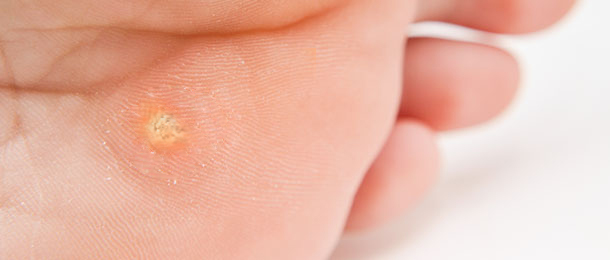
At Songdo Human Dermatology, patients often ask us, "This callus-like bump on the sole of my foot is a corn, right?" Yet when we examine it, it often turns out to be a wart. Warts and corns are easy to confuse because they look alike, but they are completely different conditions — in both cause and treatment.
Warts and Corns: What Is the Difference?
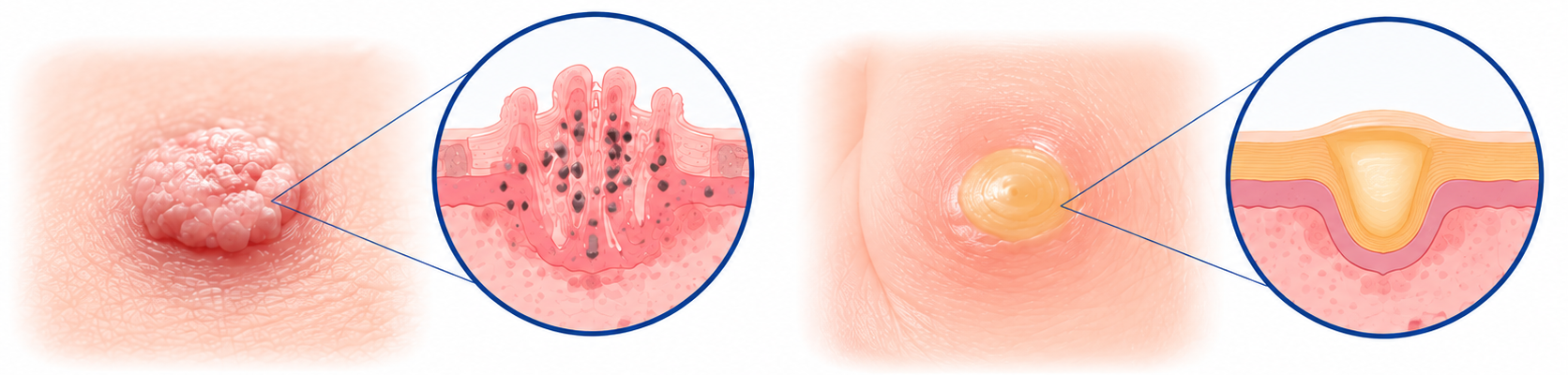
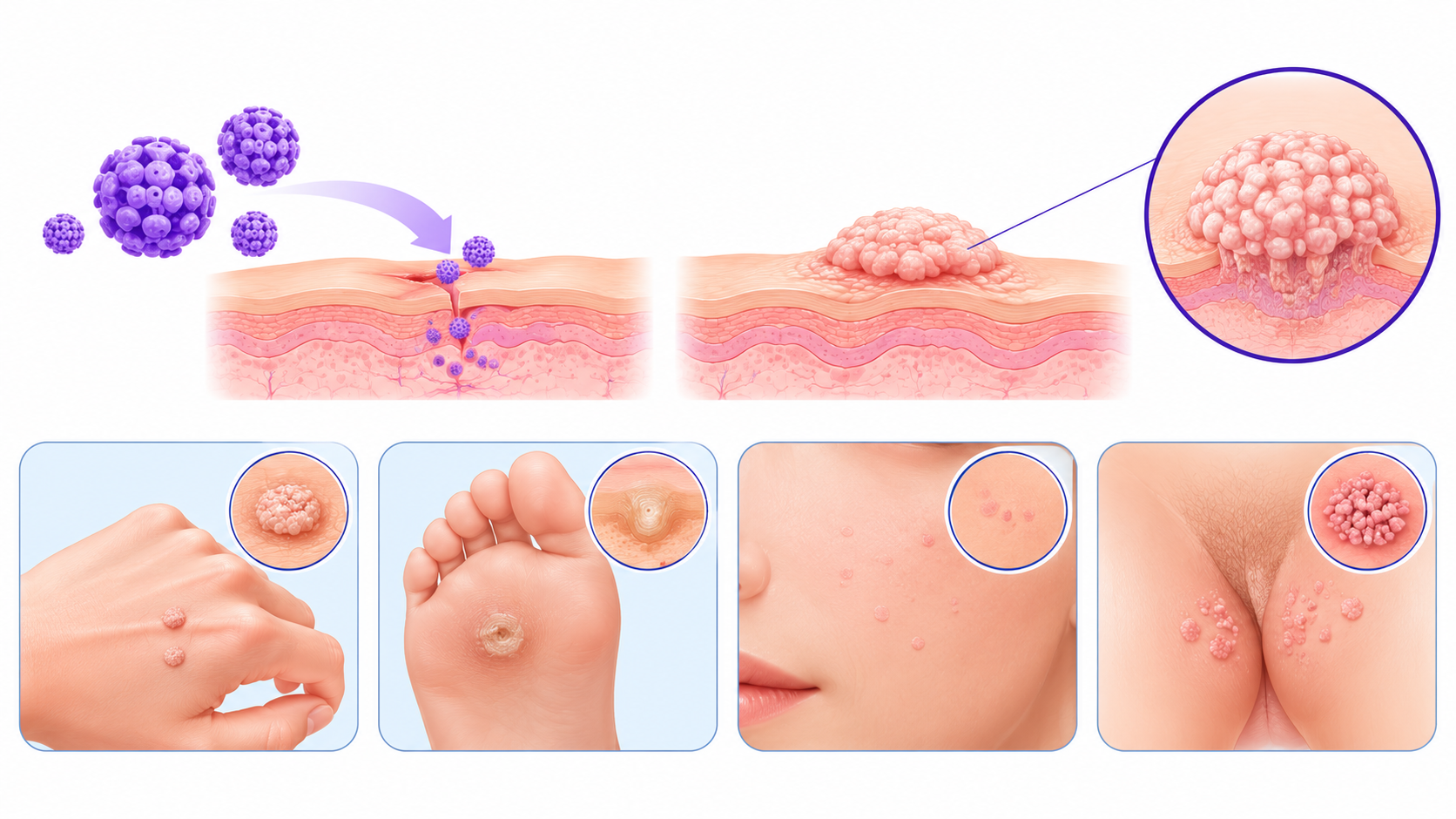
The biggest difference is the cause. A wart is a skin growth caused by human papillomavirus (HPV) infection, so it can spread to nearby skin and be passed to others. A corn, on the other hand, is skin that has thickened from repeated friction and pressure, so it is not contagious. If gently paring down the surface reveals small black dots, it is more likely a wart; if a translucent core appears, it is more likely a corn. In many cases, though, the two are hard to tell apart by eye, and an in-office examination is needed to confirm the diagnosis.
Warts: Causes and Types
Warts develop when HPV enters the body through small cuts or breaks in the skin. The virus spreads through skin-to-skin contact or by sharing towels or shoes, and it takes hold more easily when the immune system is weakened. Types include common warts on the backs of the hands and on the face, palmar and plantar warts that grow inward on the palms and soles, flat warts that spread easily if left untreated, and genital warts transmitted through sexual contact. The longer a wart goes untreated, the more easily it spreads to nearby skin, so early treatment matters.
Corns: Causes and Types
Corns form when repeated friction and pressure — from ill-fitting shoes, walking, or exercise — are concentrated on one spot, thickening the outer layer of the skin. There are two types: soft corns, which form between the toes, and hard corns, which form on pressure points on the hands and feet. In a hard corn, the central core presses on nearby nerves and causes pain.
How We Treat Warts and Corns
For both conditions, the key is an accurate diagnosis followed by removal of the lesion. Cryotherapy (freezing) is the most widely used treatment for both warts and corns, sometimes combined with topical salicylic acid to soften the thickened skin. For flat warts, we use a carbon dioxide (CO2) laser. Because warts are caused by a virus, they can come back, so several treatment sessions with follow-up are often needed. Corns recur unless the underlying friction and pressure are relieved, so changing footwear and walking habits goes hand in hand with treatment.
Preventing Recurrence and Spread
With warts, it is important not to touch or pick at them and to avoid sharing personal items such as towels. With corns, habits that reduce friction — wearing shoes that fit properly and using protective pads over pressure points — are the key to preventing recurrence.
Frequently Asked Questions
Q. Can I tell a wart from a corn just by looking?
A. If gently paring the surface reveals black dots, it is more likely a wart; if a translucent core appears, it is more likely a corn. On the soles of the feet, however, the two look very similar, so it is safest to have it confirmed by a dermatologist.
Q. Do warts go away on their own?
A. Some do clear with time, but that can take months to years, and in the meantime they may spread or be passed to others. Removing them early is the better choice.
Q. Why do warts keep spreading or coming back?
A. Because warts are caused by HPV, the virus can remain in the surrounding skin even after the visible lesion is removed, which can lead to recurrence. Not touching or picking at them helps lower that risk.
Q. Do corns go away on their own?
A. Not unless the underlying friction and pressure are relieved. Treatment to remove the core is usually needed.
Q. Can I remove a wart or corn myself at home?
A. We do not recommend it. Cutting one out yourself can spread a wart to nearby skin, and with a corn the core is often left behind, so the pain keeps coming back. It is safer to have it treated after an in-office examination.
If you suspect a wart or a corn, do not leave it to guesswork — start with an accurate diagnosis here in Songdo. The right treatment depends on which condition it turns out to be.
This content is general information about wart and corn treatment provided at Songdo Human Dermatology. Diagnosis and treatment are determined during an in-person examination, based on each patient's individual condition.